
Each year, as summer comes to an end, salmon leave the ocean to make their way up rivers and streams to spawn. Their journey will take a few weeks, on average, and the salmon’s bodies undergo incredible physical changes to function in freshwater and prepare for mating. The fish transform from their silvery ocean bodies to shades of olive, red, and green. Many develop humped backs and hooked jaws with canine-like teeth.
As the salmon migrate to their natal rivers, all their energy is put into the journey and within a few days after spawning, the salmon die. This is a process called semelparity, where an organism has a single reproductive episode before death.
Here are the five species of Pacific salmon that migrate in the Fraser Watershed:
Sockeye Salmon

Sockeye salmon are one of the most iconic and well-known species of salmon. While in the ocean, sockeye are sleek and silver-grey. As they migrate upriver to spawn, they become red and green, with males forming a hooked nose and humped back. Each sockeye salmon population in B.C. have different conservation statuses according to the Committee on the Status of Endangered Species In Canada.
The Fraser River has seen serious declines in sockeye salmon populations. Historically 50 million Sockeye salmon returned annually to the Fraser River, but in 2019, fewer than 400,000 returned and in 2020, only 288,000 returned.
In 2022, what was expected to be a peak year, pre-season forecasts predicted 9.8 million sockeye. By late August, that estimate had been reduced by nearly half to 5.5 million, with warmer water temperatures and drought delaying the return.
In 2025, the story is more hopeful. The Pacific Salmon Commission now estimates that 9.6 million sockeye are returning to the Fraser, the largest run since 1997 outside of the unusually strong 2022 cycle year. Much of this increase comes from the summer run, particularly late Stuart and Chilko sockeye, which are returning in numbers far above expectations. After years of decline and uncertainty, this year’s return is a reminder of both the resilience of salmon and the importance of protecting the rivers that sustain them.
Chum Salmon
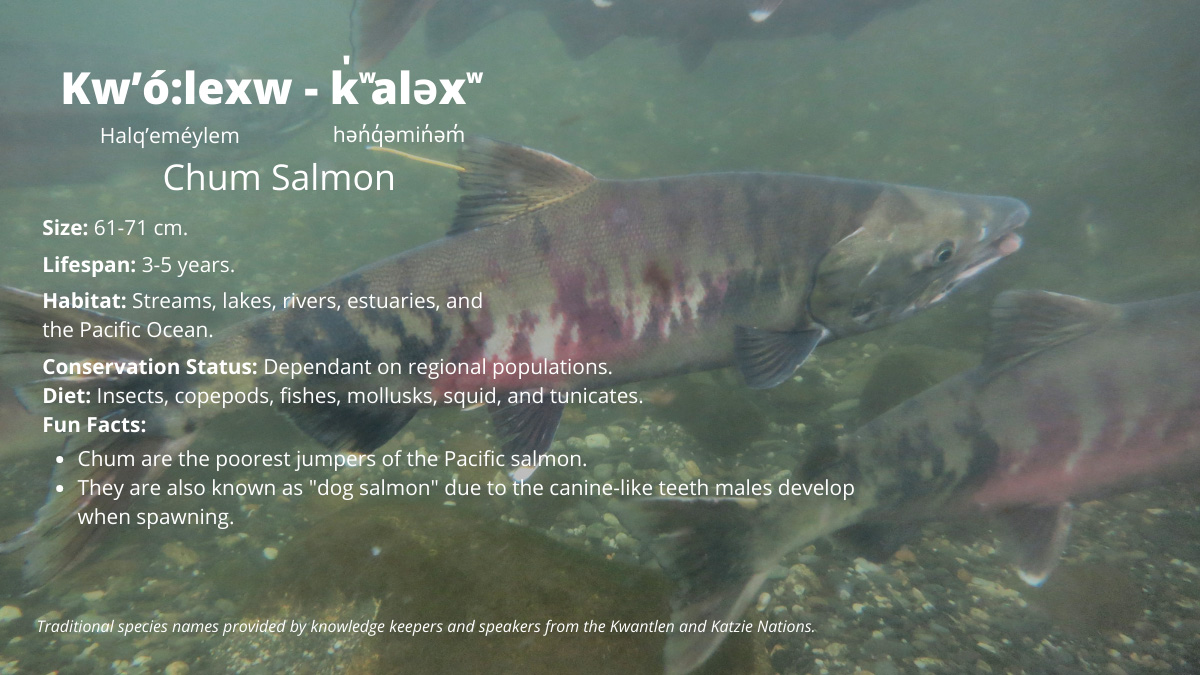
Chum salmon have a unique spawning colouration. These salmon turn a dark brown with red to purple vertical stripes along their sides. Like other salmon species, they develop a hooked snout with canine-like teeth, earning them the nickname “dog salmon”. Chum are the poorest jumpers of the Pacific salmon, which is why many chum prefer to spawn in small streams and intertidal zones. Within a few days or weeks of hatching, chum salmon will migrate to the ocean, where they will remain for 3 to 5 years before returning to their natal spawning grounds.
Chinook Salmon

Spawning chinook become olive brown, red, or purplish in colour. When they hatch, most juvenile chinook will stay in freshwater for a year as they grow. Chinook salmon are also known as spring salmon because they return to some rivers much earlier than other Pacific salmon. Chinook are the largest salmon species in the Pacific Ocean and are incredibly important to people and wildlife along the coast. In the ocean, they are essential prey for predators, especially the endangered Southern Resident orcas, and make up 80% of the whale’s diet.
Pink Salmon

Pink salmon are the smallest and most abundant of the Pacific salmon species. When they return to rivers to spawn, male pink salmon develop a large humpback, making them easily distinguishable from other salmon species. Pink salmon’s colouration also shifts from silver to olive brown with a white belly. Juvenile pink salmon do not remain in freshwater for as long as other salmon species, usually migrating to marine waters and estuaries as soon as they can. This species also grows the fastest of all the pacific salmon and matures at 2 years.
In 2025, the Fraser is expected to see an exceptionally large pink salmon run, with forecasts of nearly 27 million fish, a potential record if realized.
Coho Salmon

Coho salmon spawners can be identified by the bright red coloration on their sides with dark green heads and backs. Spawning males also develop a hooked snout and sharp teeth. Coho tend to remain closer to the ocean when they spawn, opting for streams and tributaries along the coast. Juvenile coho will stay in fresh water for as long as 3 years before they journey to the ocean.
Coho salmon are a focus of the Foodlands Corridor Restoration Program’s work on the sc̓e:ɬxʷəy̓əm (Salmon River), where we have created wetted off-channel habitat for overwintering coho. We are thrilled to report that juvenile Coho have been spotted utilizing the restored habitat during effective monitoring visits to the site.

Wondering where you can see salmon?
The Pacific Salmon Foundation has created an interactive map that shows when and where to look, and which species you’re most likely to spot.
This post was originally published on October 19, 2022, and updated on August 27, 2025.