

Photo by Emily Pearson
Foodlands: Toolkit
Interested in approaching restoration work in a collaborative place-based way?
The Foodlands Toolkit shares learnings from restoration work along the sc̓e:ɬxʷəyəm* (Salmon River) Corridor. It is offered as a free resource for groups exploring collaborative approaches to riparian restoration and cultural food systems.
The toolkit brings together reflections from practice, planning prompts, and selected UNDRIP articles that have informed this work. It is intended as a practical resource and reflection tool rather than a prescriptive guide.

The Foodlands Toolkit includes:
- insights drawn from place-based restoration experience
- worksheets to support project planning, workflows and reflection
- selected UNDRIP articles to support understanding of responsibilities related to First Nations rights and title.
- Stories and reflections from the sc̓e:ɬxʷəy̓əm corridor
The toolkit is offered as a starting point for learning and adaptation. Each place, Nation, and community will approach restoration differently, and the intention is to support thoughtful, relationship-based work rather than provide a single model.
Applying UNDRIP principles and collaborative restoration practices is an ongoing process. This resource is shared in the spirit of learning and reflection, with the understanding that this work continues to evolve over time.
If you have insights to share or notice something that could be improved, you are welcome to be in touch. Learning is strongest when it happens in relationship.
Download the Foodlands Toolkit
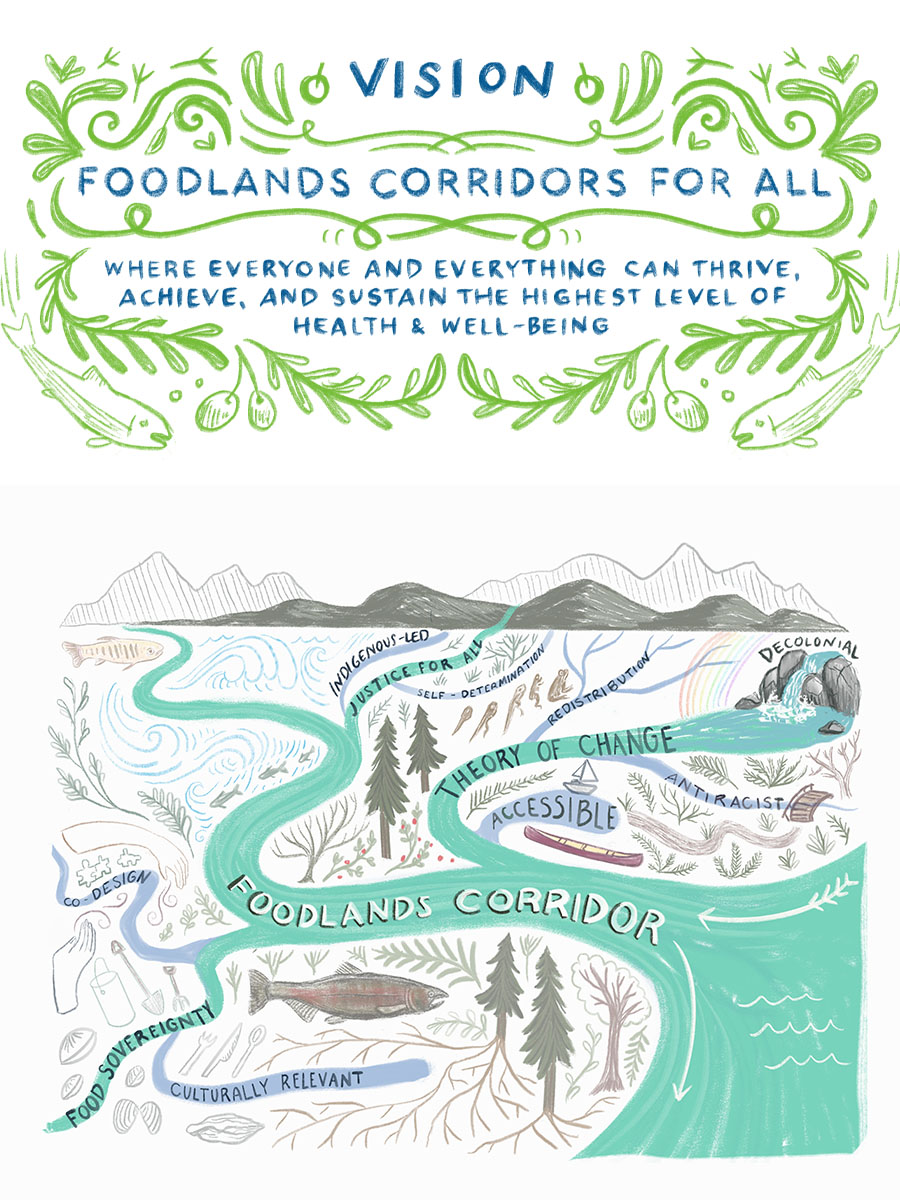
“sc̓e:ɬxʷəy̓əm” is the hən̓q̓əmin̓əm̓ word for the Salmon River. hən̓q̓əmin̓əm̓ is the Downriver dialect of Halkomelem. Translations provided by Knowledge Keepers and language learners from Kwantlen and Katzie Nations.

Thank you to the Real Estate Foundation of BC, the Keta Legacy Foundation (also known as Mountaineers Foundation), and Dr. Bronner’s for funding the development of this toolkit.


